
At Lac Hong University
LHU: Dong Nai's “intellectual infrastructure” in the high-tech era
In the process of economic structural transformation toward high-tech industry and a knowledge-based economy, a locality needs not only transport infrastructure, industrial parks, or logistics systems, but also a strong “intellectual infrastructure” capable of nurturing high-quality human resources and an innovation ecosystem. In Dong Nai, that role is increasingly taking shape at LHU.
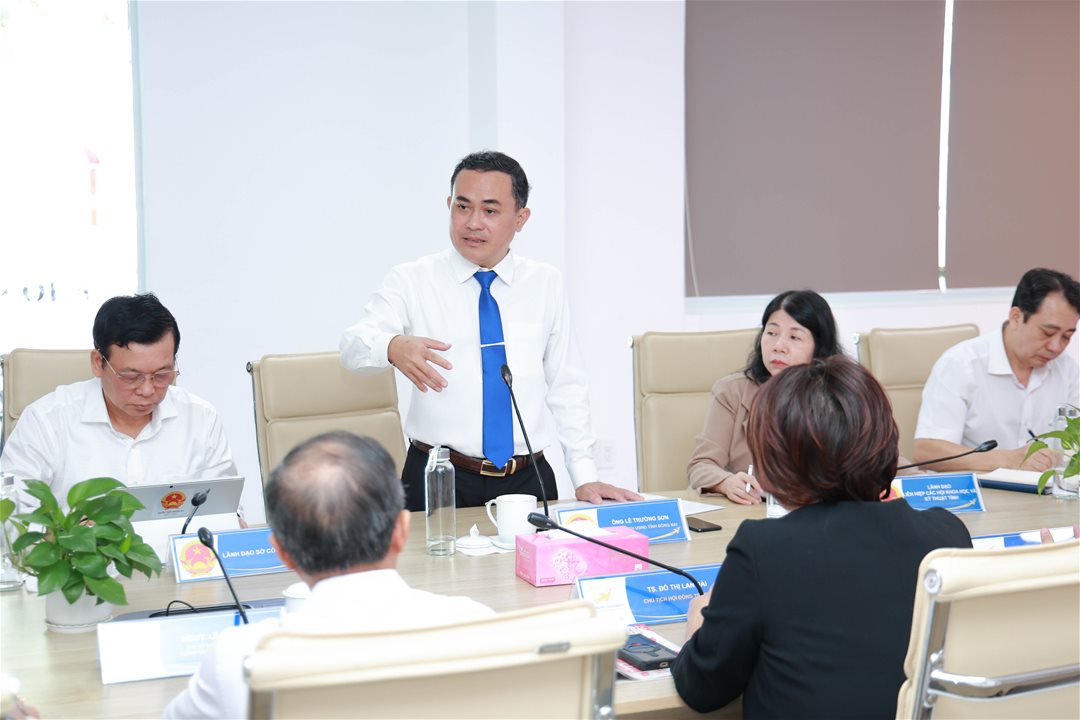
The provincial leadership’s strong focus on higher education, particularly in information technology, artificial intelligence (AI), robotics, semiconductor chips, and the innovation center model, reflects a long-term vision: industrial development must go hand in hand with the development of internal technological capabilities. In this context, LHU has proactively positioned itself as a key component of the province’s development strategy.
Addressing the early Spring working session held at LHU on March 2, 2026, Mr. Le Truong Son, Vice Chairman of the Dong Nai provincial People’s Committee, emphasized “We hope to strengthen coordination with the goal of commissioning LHU to serve as a bridge in the ‘triple helix’ collaboration model, especially as the province is continuously expanding its industrial park areas. We are highly impressed by the University’s achievements in Robocon and AI robotics, as well as its strengths in communication and digital transformation. The provincial leadership also discussed comprehensive cooperation programs between the University and the provincial Newspaper and Radio–television Station to further promote communication and outreach to the community".
LHU gradually affirms its role as the province’s “intellectual infrastructure”
First, under the “triple helix” model linking Government – University – Enterprise, LHU has for many years consistently pursued a training model closely aligned with real-world production practices. Enterprises participate in curriculum development, host student internships, commission research projects, and recruit graduates directly. Students not only study theory but also gain access to real working environments while still on campus. This helps narrow the gap between education and the labor market, an issue of particular concern to local authorities amid increasingly intense competition for skilled talent.
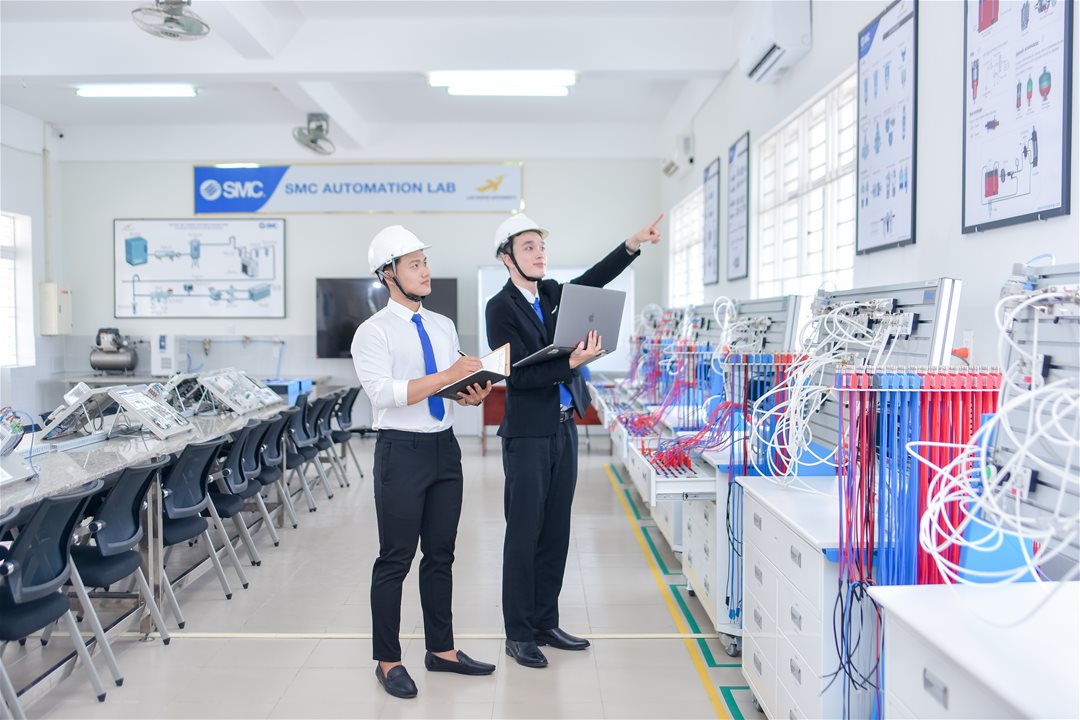
Regarding robotics and artificial intelligence, LHU has made its mark through numerous research products and achievements in national and international technology competitions. Its AI–Robotics laboratories have been systematically invested in, serving not only teaching purposes but also applied research and technology transfer. Participation in events such as TechFest Dong Nai 2025 and other international platforms is not merely about achievements; it also demonstrates substantive research capacity, a vital factor in building the province’s technological brand.
As global supply chains are restructuring and the semiconductor industry is becoming a strategic sector, LHU’s focus on enhancing the quality of information technology education, while gradually approaching international accreditation standards reflects serious preparation. Training technology engineers today extends beyond programming skills to include systems thinking, design capabilities, and adaptability to emerging technologies - core competencies of the digital era.
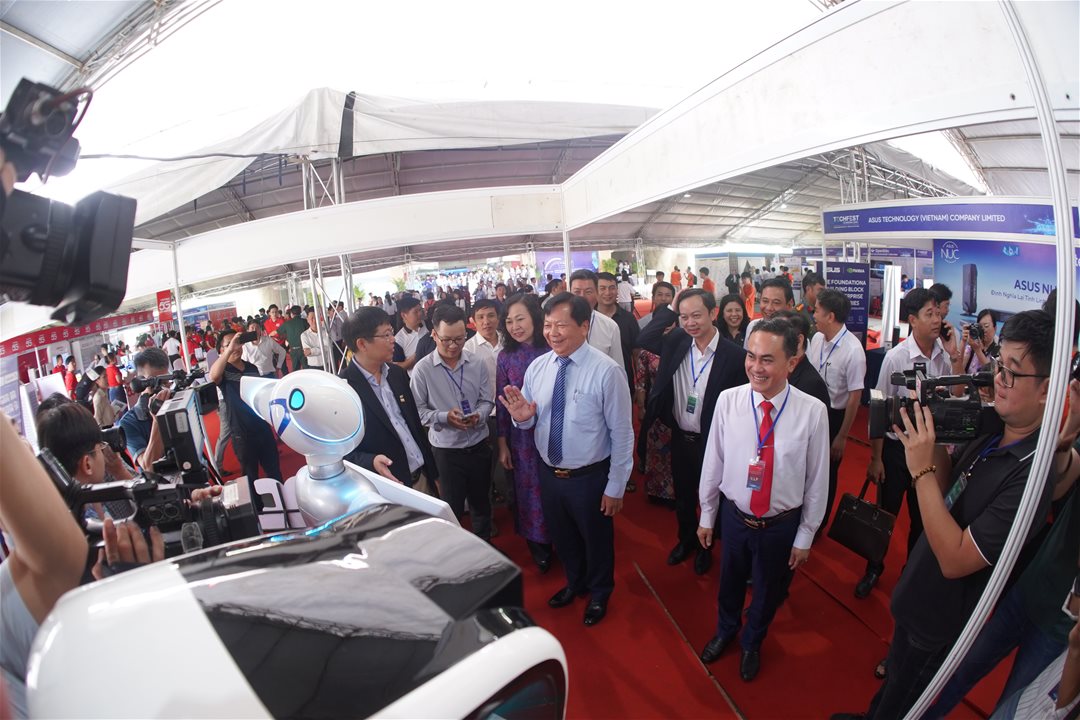
Notably, the Innovation Center model at LHU is being developed as a space connecting research, application, and entrepreneurship. There, ideas do not remain confined to laboratories but are given opportunities to move closer to the market. This intersection of training, research, and enterprise forms the foundation of a local innovation ecosystem. If operated effectively and supported by appropriate coordination mechanisms with provincial departments and agencies, the center could become a launching pad for technology products bearing the Dong Nai brand.
Steadfast commitment to strategic goals
Assoc. Prof. Dr. Lam Thanh Hien, Rector of LHU, stressed “To truly become an intellectual infrastructure, a university needs more than facilities or achievements. It requires the capacity for renewal, multidimensional connectivity, and a strong sense of responsibility toward common development. LHU remains on that journey - modest yet steadfast. The companionship of provincial leaders and regulatory agencies is not only recognition but also motivation for the University to continuously improve. In its development strategy, LHU aims to become a leading applied university in Vietnam by 2030”.
.jpeg)
In the high-tech era, a locality’s competitive advantage is determined not merely by the size of its industrial parks, but by the quality of engineers, researchers, and technology entrepreneurs trained locally. When higher education becomes an integral part of the development strategy, and when Government, University, and Enterprise move in the same direction, “intellectual infrastructure” will no longer be an abstract concept.
With ongoing investments and strategic initiatives, LHU is well-positioned to make increasingly visible contributions as a center for technology education and research, an essential component of Dong Nai’s sustainable development ecosystem in the decades to come.
LHU # intellectual infrastructure # high-tech human resources # triple helix
